Live Oak Interpretive Project & Research Incubator
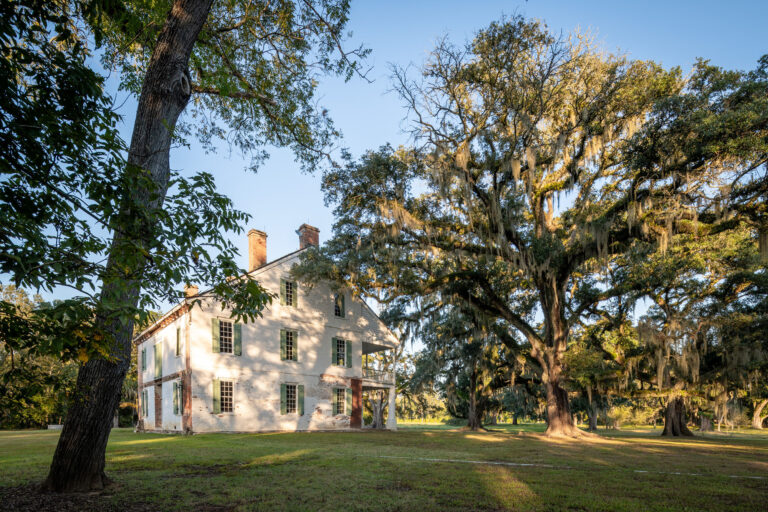
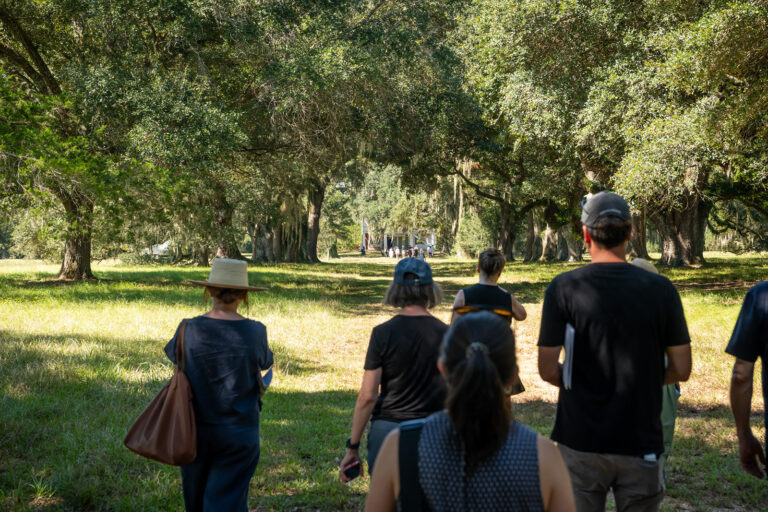
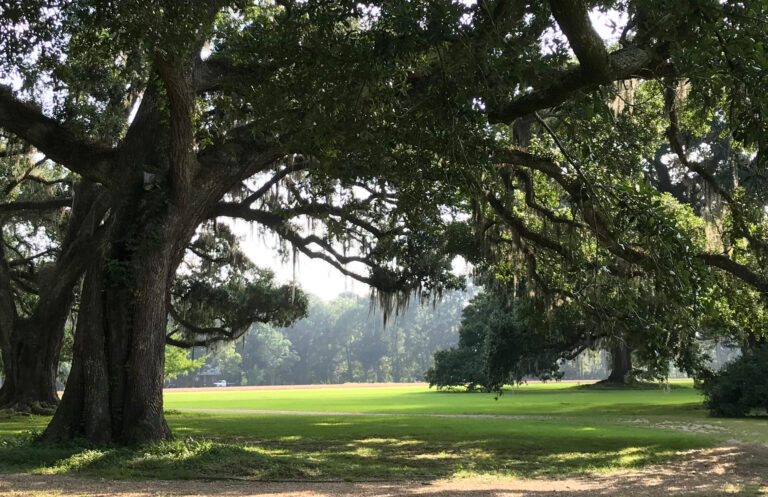
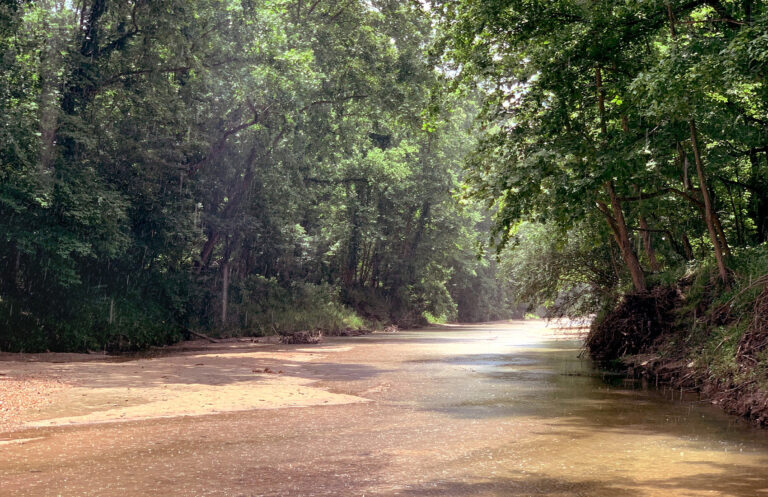
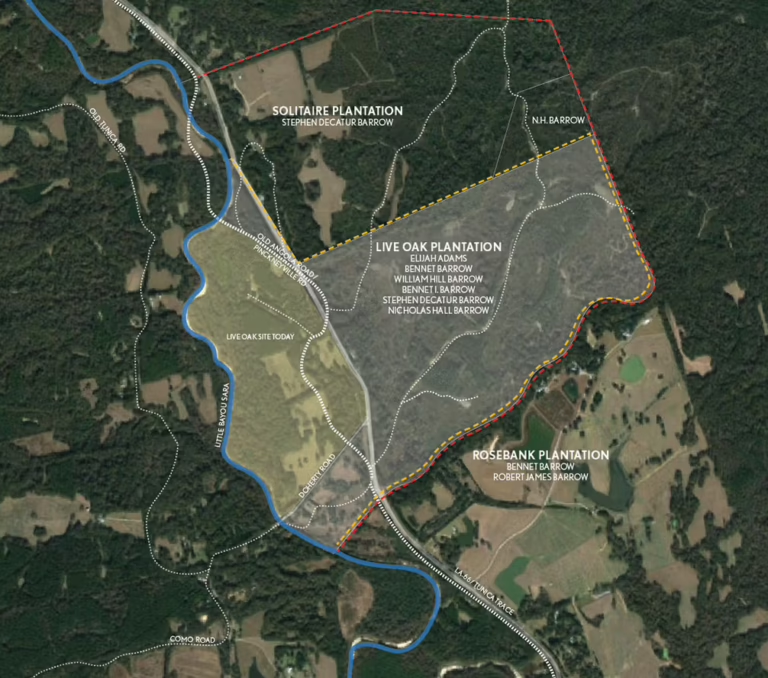
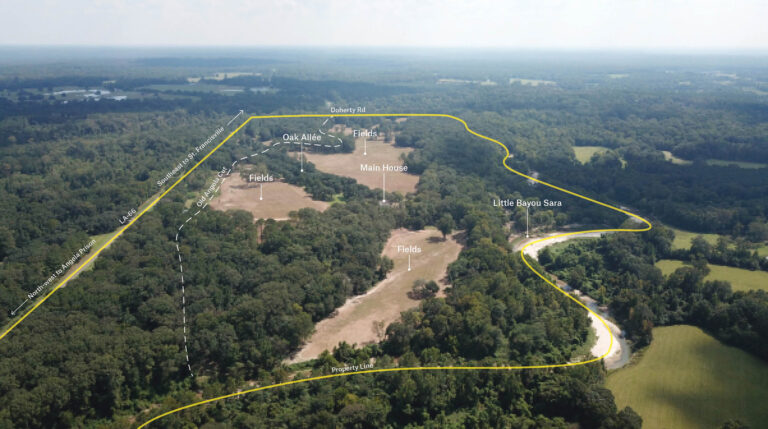
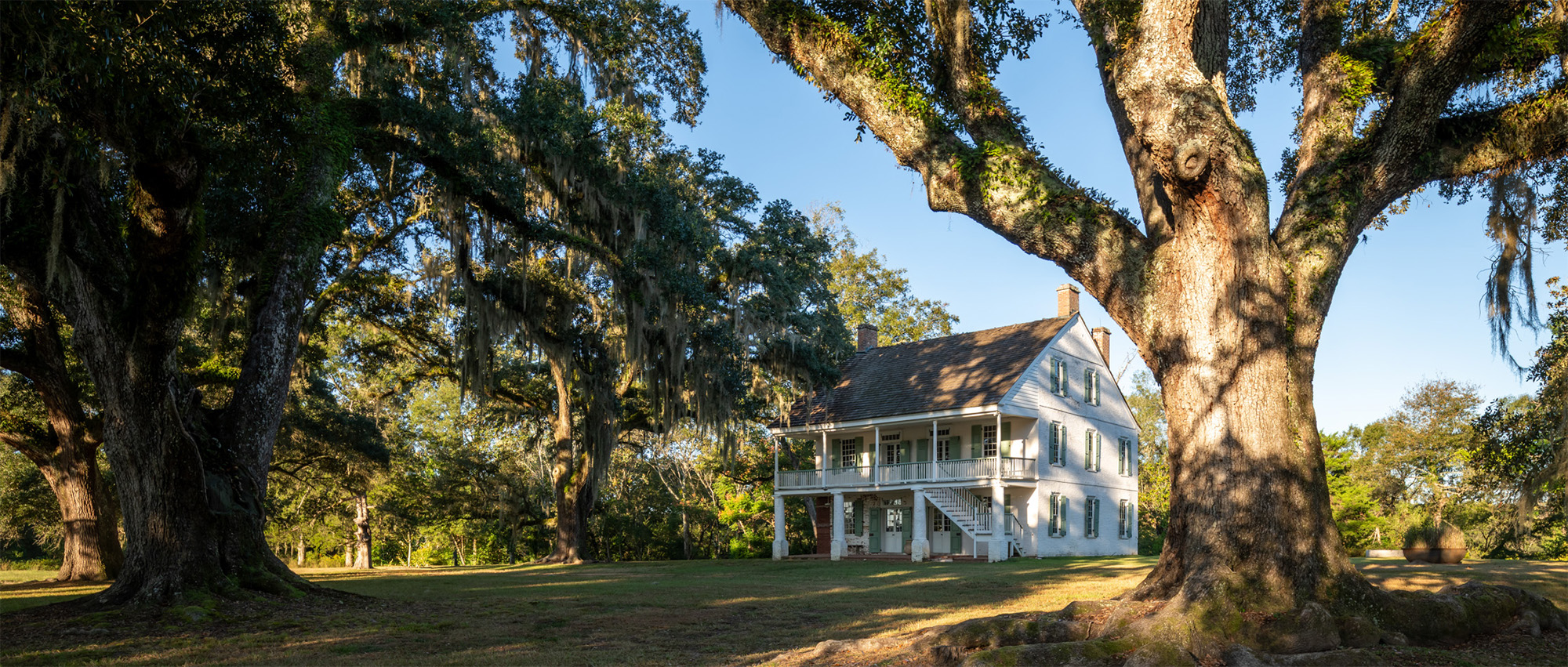
Live Oak is a 240-acre former plantation located in West Feliciana Parish, Louisiana, rooted in a complex and painful history that begins with the Tunica, Houma, and other Indigenous people and includes centuries of forced labor by those who were enslaved. Today, the site—which is in the process of being permanently protected through a conservation easement—comprises the western third of the original property. It consists of the Main House, built circa 1810, the Oak Allée, over 240 acres of former plantation fields, Little Bayou Sara floodplain, woodlands, and remnants of a historic Tunica trading path called the Tunica Trace / Old Angola Cut.
Since 2020, Trahan Architects has been supporting the Live Oak Interpretive Project with overall project management, architectural services, team building, and site management planning. The full team includes a collective of advisors and specialists, as well as Fondation Trahan, a private nonprofit, and the Live Oak Foundation, a public 501(c)3.
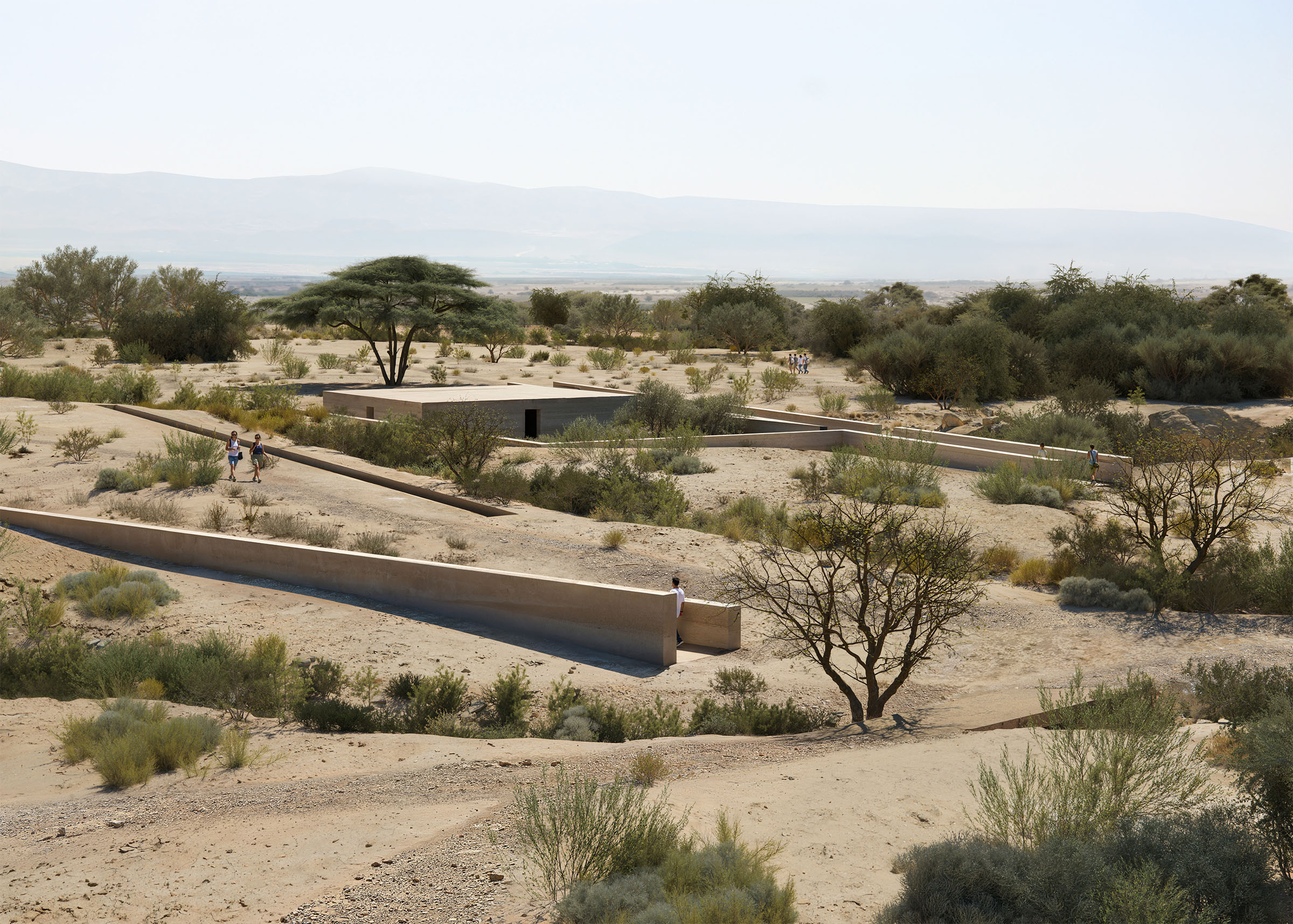
The project’s goal is to create a place for healing for the land and for everyone impacted by the site’s history and its related legacies. A conservation center is being designed on the site to provide space for operations, gatherings, programming, and education.
Live Oak, West Feliciana Parish, Louisiana
Status
Ongoing
Size
Total Area: 240 acres
The Main House: 5,400 SF
Conservation Center: 10,000 SF
Project Team
Trey Trahan, Margaret Jankowsky, Stephen Breaux, Gabriela Calzada, April De Simone, Shelby Downs, Jonathan Fidalgo, Julia LeBlanc, Brian Richter, Henry Savoie
Working Group
Trahan Architects (Project Lead, Architecture, & Master Planning)
Reed Hilderbrand (Landscape Architecture & Preservation)
Jane’s Way (Strategic Advisory)
Designing for Democracy (Spatial Impact)
Specialists
Coastal Environments, Inc. (Archaeology, Ecology), Dr. Susan L. Buck (Architectural Paint Analysis), Cypress Building Conservation (Architectural Conservation), Pastorek Habitats (Meadow Horticulture), Dr. Charles Allen (Ethnobotany), Soil and Stem (Site Management), Circle Consulting (Ethnography), LSU Department of Geography and Anthropology (History), Lively Oak (Arboriculture)
This project serves as an incubator for our firm’s ethos: it exemplifies how we integrate landscape, architecture, and ethnography into our architectural practice, allowing each to inform and elevate the other. It reflects our deep respect for authentic structures and craft, and our belief that design can hold space for grief, memory, resilience, and hope.
We acknowledge the land’s historic uses—its layered narratives of suffering and survival—and engage with artifacts of the past to tell stories that are honest, inclusive, and enduring.
Live Oak stands as a model of how architectural practice can acknowledge a site’s past use and transform that awareness into a contemporary act of acknowledgement, responsibility, and healing.
At Live Oak, we ask ourselves how architecture can help transform a site marked by violence and denial into one of healing and shared humanity? Might absence, removal, or exposure speak louder than new construction? What forms, materials, or gestures can hold memory without erasure?
Our aim is to honor the experiences of those connected to Live Oak, and to bring healing to both the land and the descendants, diaspora communities, and all people touched by the weight of this legacy.
The soil at Live Oak holds deep layers of memory—traces of those who stood, lived, labored, and cared for this land. Once home to the Houma and Tunica peoples, and later transformed by colonial conquest, trade routes, agricultural production driven by slave labor, and private family use.
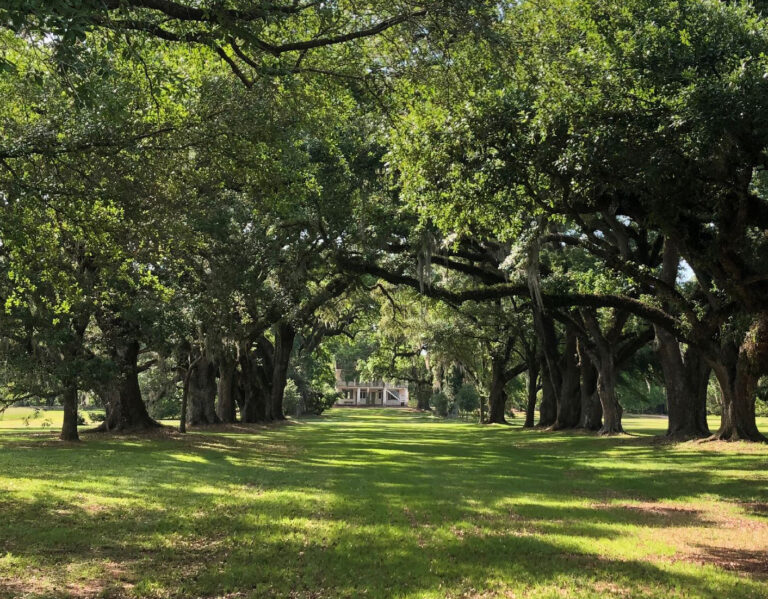
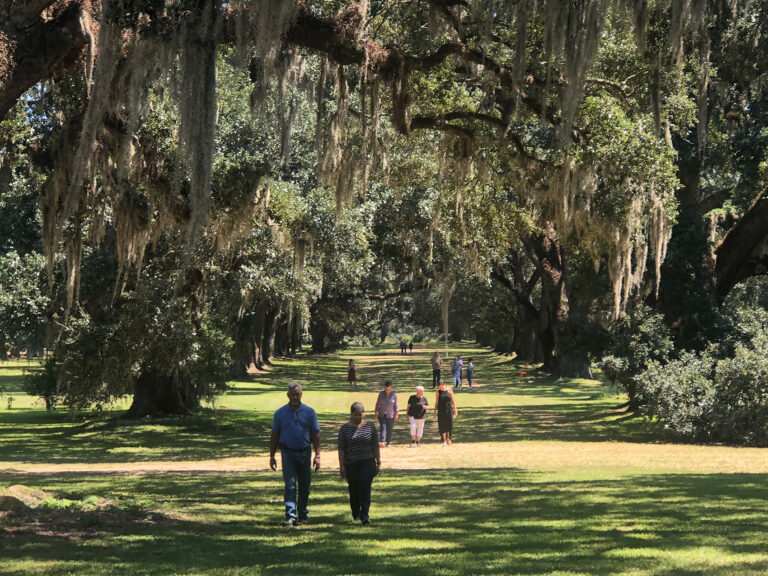
These stories are embedded in the landscape, from the ever changing Little Bayou Sara floodplain, to the ancient Tunica trading path that weaves through the property, to the acres of fields that formed the core of the plantation, to the nearly 200-year-old Oak Allee.
Since 2020 numerous practitioners have been engaged to research and reveal Live Oak’s history.
Archaeological excavation has revealed a potential 1835 homestead site; and cultural landscape analysis and fieldwork have uncovered the likely Tunica Trace / Old Angola Cut route through the site. Analysis and conservation on the Main House, paired with historical research by partners at LSU, have deepened our understanding of this property as a working landscape during its plantation era.
This research has guided the following site work: reveal the historic fields and related windbreaks, maintenance paths, and viewsheds; remove modern vehicle access from the Oak Allée; conserve the historic Main House and restore its surrounding landscape; stabilize the loess soils and bluff; remove invasive plant species; reveal larger portions of the Tunica Trace / Old Angola Cut; and remove manmade ponds from the ravine.
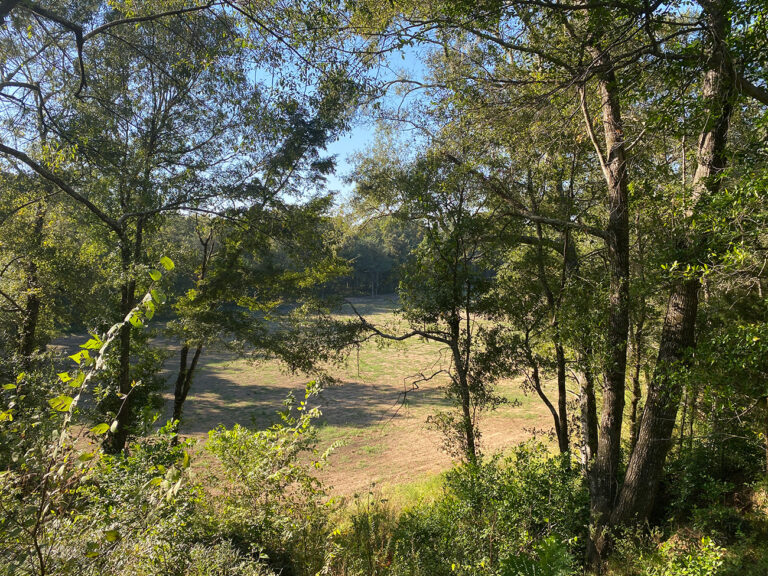
Several projects and practices have been deployed on site to improve the overall ecological health of the property after centuries of extractive and profit-driven management. From 2022-2024, invasive plants were carefully removed from Live Oak’s woodlands, allowing light to filter down to the forest floor and leading to new growth of native groundcover, as well as revealing key cultural landmarks such as the historic Tunica Trace / Old Angola Cut.
Removing the contemporary vehicular drive along the Oak Allée is reducing soil compaction and supporting tree longevity. Slight changes to topography around the Main House have mitigated dangerous bluff erosion by directing water toward the fields instead of the bluff.
Returning artificial ponds to naturally occurring wetlands has improved water management, reduced erosion, and provided habitat for native woodland species. Incorporating traditional management practices like controlled seasonal burning is revitalizing native plant communities and suppressing invasive species.
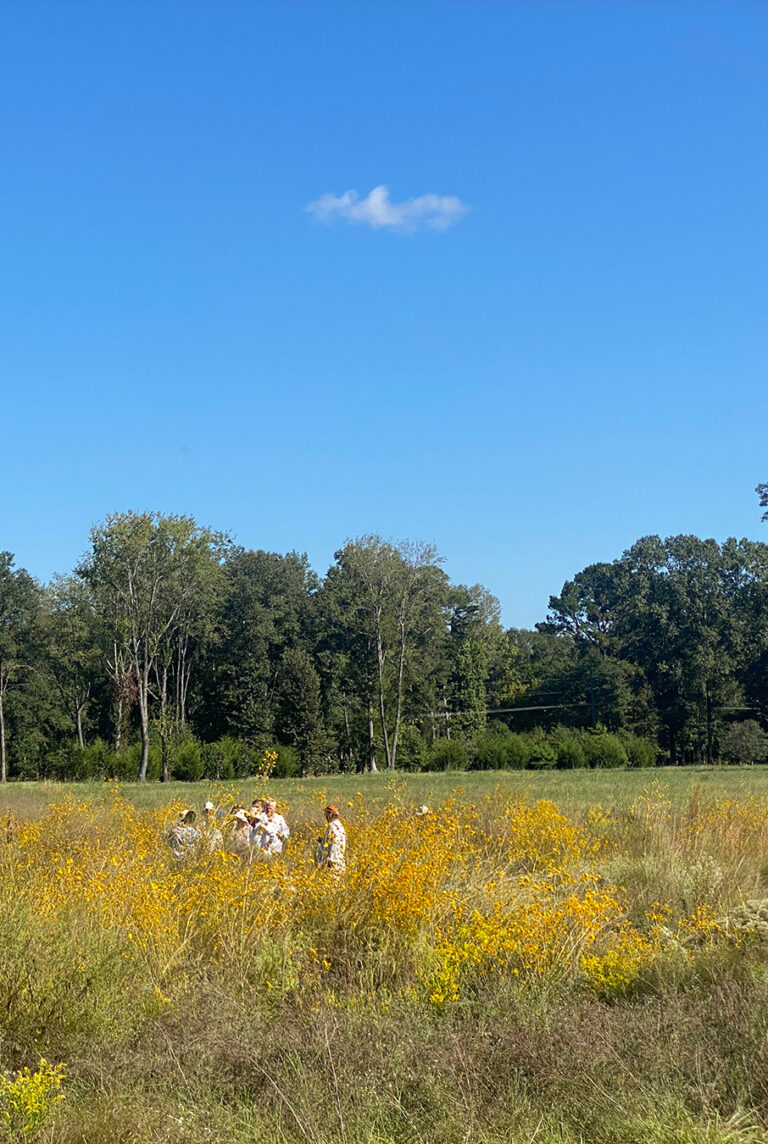
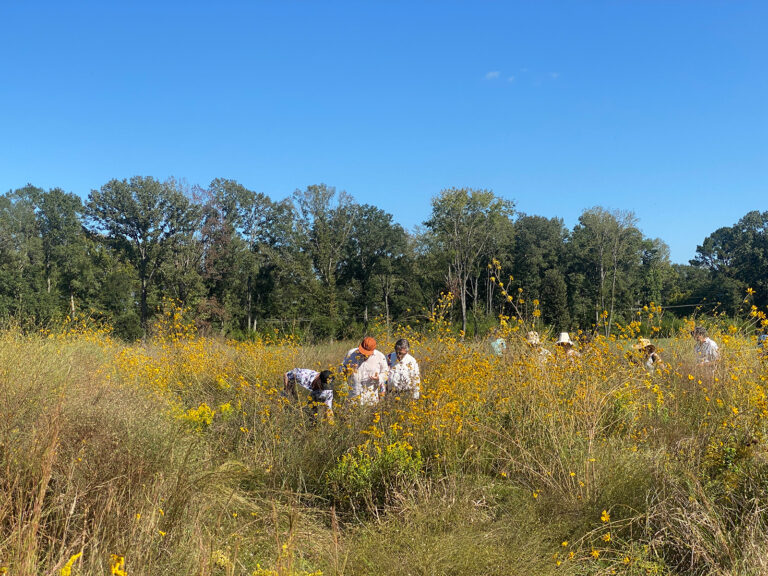
Over the past few years, more than 60 acres of former plantation fields have been converted to meadows. These feature over 100 species of grasses, perennials, and forbs which originally grew and evolved in southeast Louisiana or nearby Louisiana prairies, before the land was used for plantations.
These native plants have greatly increased biodiversity on site, supporting native pollinators, beneficial insects, birds, and small mammals that rely on them for habitat and as food sources. The biomass and root systems of the plants are actively improving soil health and water permeation into groundwater systems.
Seasonal burning for the meadows is a key management practice that mimics natural fire patterns that these meadow species rely on for continued propagation and weed suppression.
Preserving the unique contemplative nature of the site had led to a strategy of land-focused management and minimal architectural intervention, all informed by research that continues to this day.
Trahan Architects has led a broad team, from ecologists and ethnographers to archaeologists and landscape architects, to research and reveal Live Oak’s history from a multi-disciplinary approach with the goal of pursuing conservation and healing, rooted in a belief in our shared humanity.
Live Oak’s research and planning have resulted in a Conservation and Site Management Plan that identifies key character zones for understanding Live Oak’s historical and cultural significance, limited building areas for potential new construction, and guidelines for education-focused site programming.
The plan also seeks to restore historic open field patterns, re-establish key views from the Main House and entry drive, and enhance ecological health and site accessibility.
This exemplifies Trahan Architects’ collaboration with specialist researchers to uncover ecological and historical layers embedded in the land and translate them into architectural proposals. The approach shapes the firm’s work across projects, weaving together rigorous research, respect for expertise, and a commitment to architecture that responds to context rather than imposes upon it.
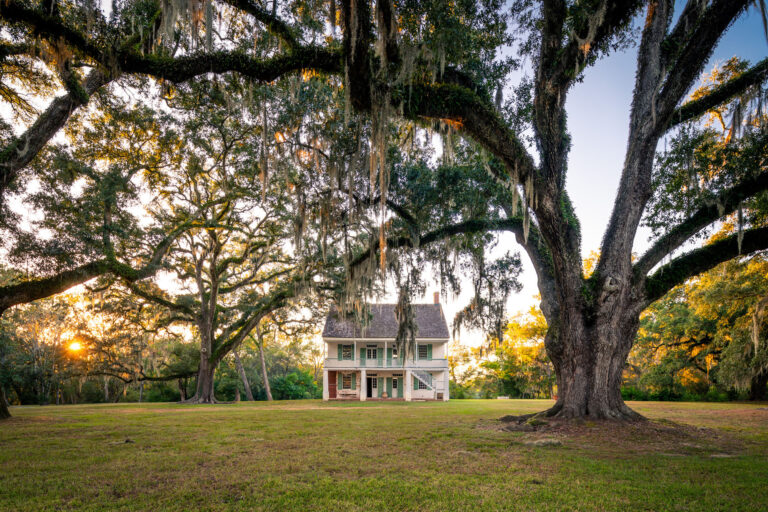
Live Oak’s Main House was built in 1810 and is located at the end of the historic Oak Allée, perched on a bluff to maximize breezes and views onto the fields.
Thorough research has guided work on the Main House, primarily the removal of modern interventions such as appliances, fixtures, and the surrounding sitting garden. Extensive paint and material sampling and testing has been done to determine how the interior and exterior looked during each era of the house’s ownership and use.
Historical and physical analysis have led to detailed information about the Main House’s role and history, and its relationship to the working plantation landscape, all of which are informing a future architectural response.
Currently the Main House is in the midst of continuing research and conservation.
Samples from the Main House’s exterior brick show that they were originally coated with a flat, red-brown wash, and mortar joints were lined with white pencilling — indicating likely influence from Anglo building styles farther north. Later, in the 1830s and 40s, the exterior was painted white with a lime-based coating.
Excavation of the front porch revealed that an earlier entrance porch from 1810 was about 10”-12” lower than the current porch.
Interior paint research reveals that many parts of the house were painted with detailed faux finishes, from mantels and wainscoting in primary rooms like the parlor, to secondary areas including a small narrow closet under this service stair.
Research is ongoing to understand why such unusual highly decorative painting was featured in this house, and especially in areas such as the closet underneath the service stairs which would not have been regularly seen by the home’s residents or visitors.
Paint from doors, windowsills, walls, wainscoting, and mantels was sampled and analyzed at 100x magnification, with visible light (VIS) and UV light (UV), showing the previous layers of paint.
Historical records indicate that while the home has been primarily domestic in nature, at times it has been unoccupied and at others it has even hosted a post office.
[Live Oak] retains many mysteries about the people who lived and worked in it, which the surviving paints and other physical evidence may help to explain.